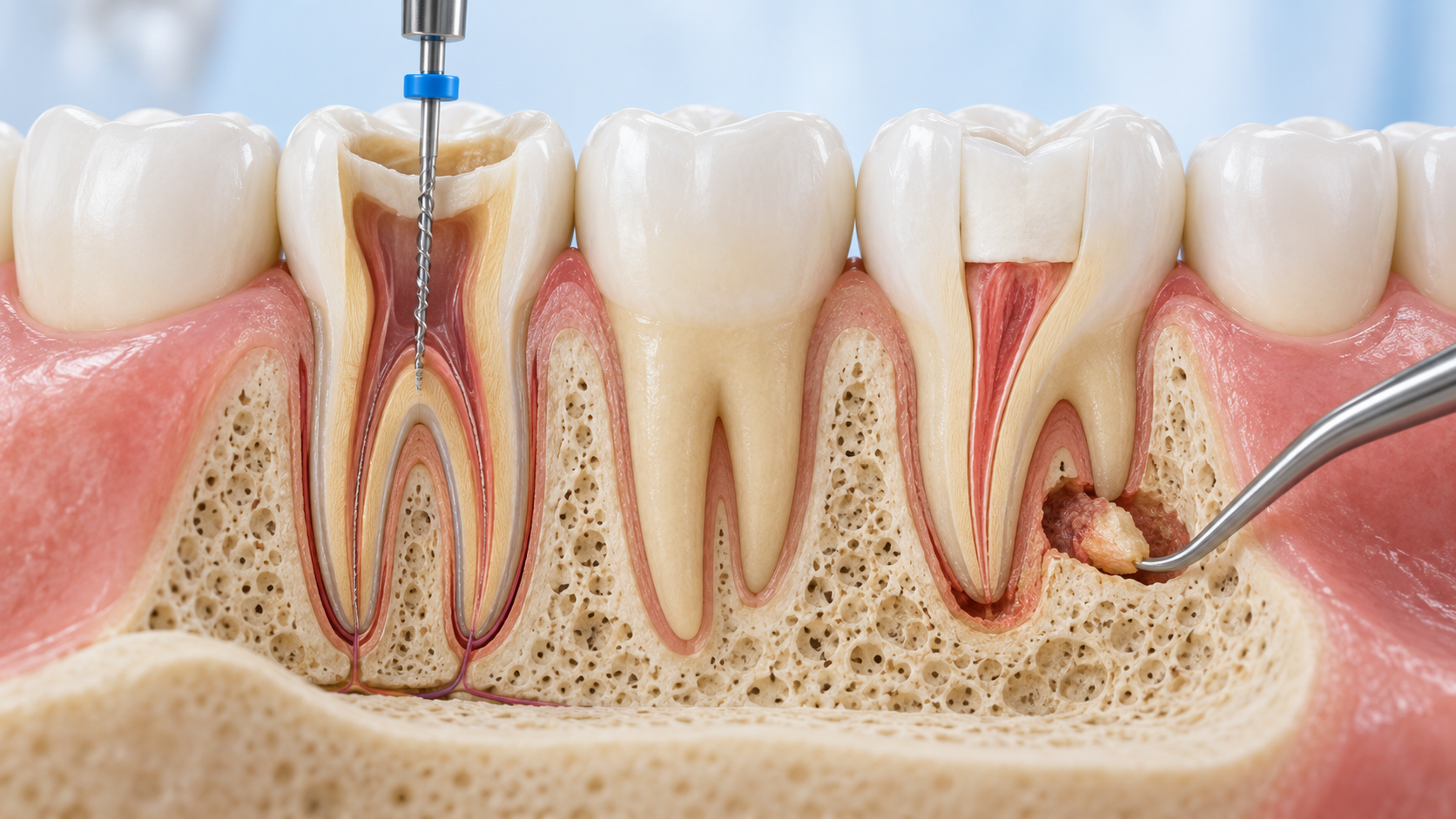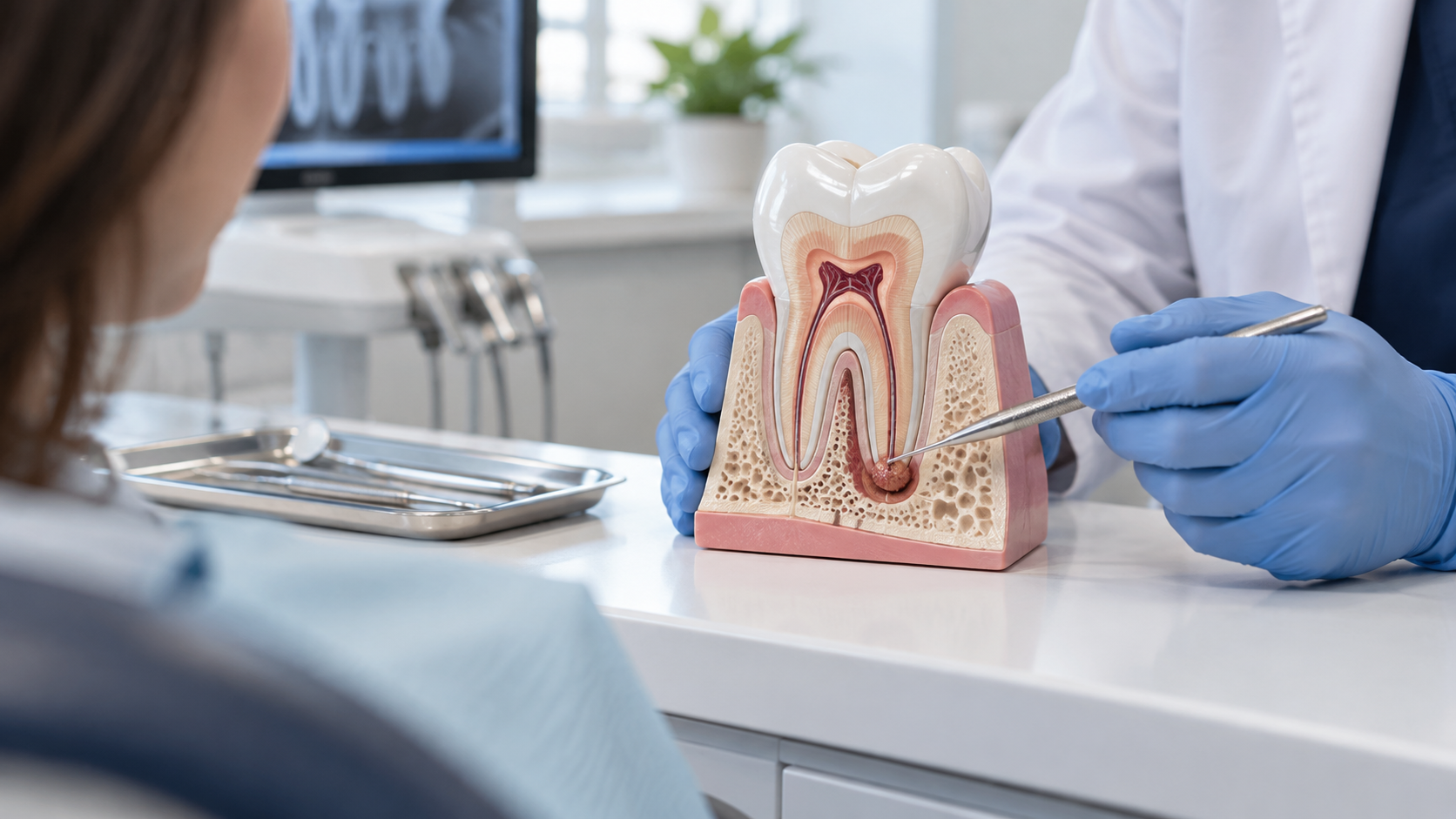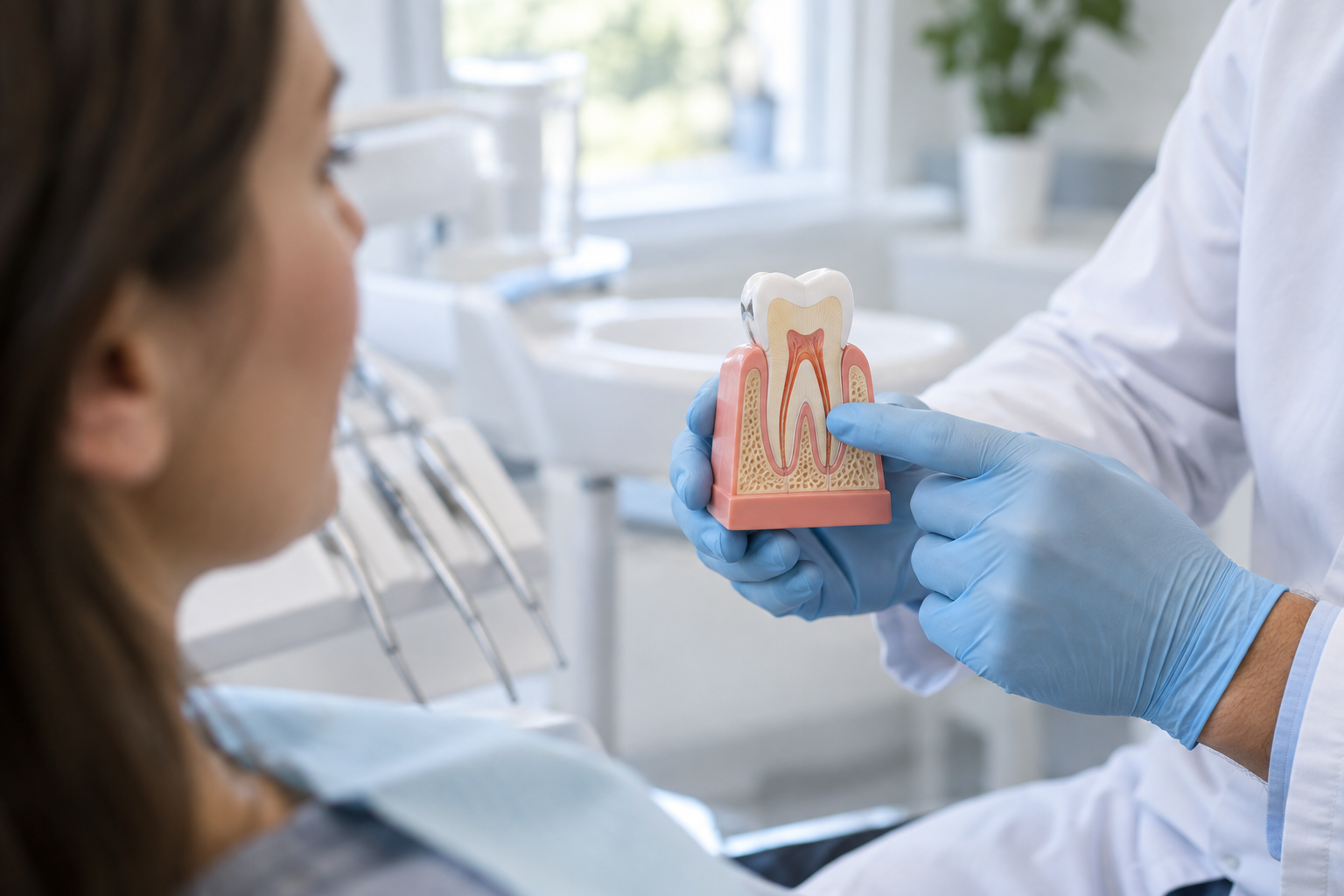
When a tooth becomes infected, the pain can be intense, the decision can feel urgent, and the treatment options may seem confusing. Two of the most common solutions are root canal therapy and tooth extraction. While both treatments can remove infection and relieve discomfort, they work in very different ways.
In the root canal vs extraction debate, the better option usually depends on whether the tooth can be saved safely and predictably. In many cases, a root canal is preferred because it treats the infection while preserving your natural tooth. However, there are situations where extraction may be the healthier, more practical choice.
Understanding when to extract a tooth vs get a root canal can help you feel more confident when discussing your options with a dental specialist.
Understanding Tooth Infections
A tooth infection often begins when bacteria reach the inner pulp of the tooth. The pulp contains nerves, blood vessels, and connective tissue. When it becomes inflamed or infected, the pain may be sharp, throbbing, or constant.
Common signs of an infected tooth include:
- Severe toothache or pressure
- Lingering sensitivity to hot or cold
- Pain when biting or chewing
- Swollen gums near the affected tooth
- A pimple-like bump on the gums
- Facial swelling
- Bad taste or drainage in the mouth
- Fever or general discomfort in more serious cases
An infected tooth will not heal on its own. Pain medication or antibiotics may provide temporary relief in some situations, but the source of the infection still needs to be treated. That typically means removing the infected tissue through root canal therapy or removing the tooth through extraction.
What Is a Root Canal?
A root canal is a tooth-saving procedure that removes infected or inflamed pulp from inside the tooth. After the infected tissue is removed, the canals are cleaned, disinfected, shaped, filled, and sealed. In many cases, a dental crown is later placed to protect and strengthen the treated tooth.
The main goal of root canal therapy is simple: eliminate infection while allowing you to keep your natural tooth.
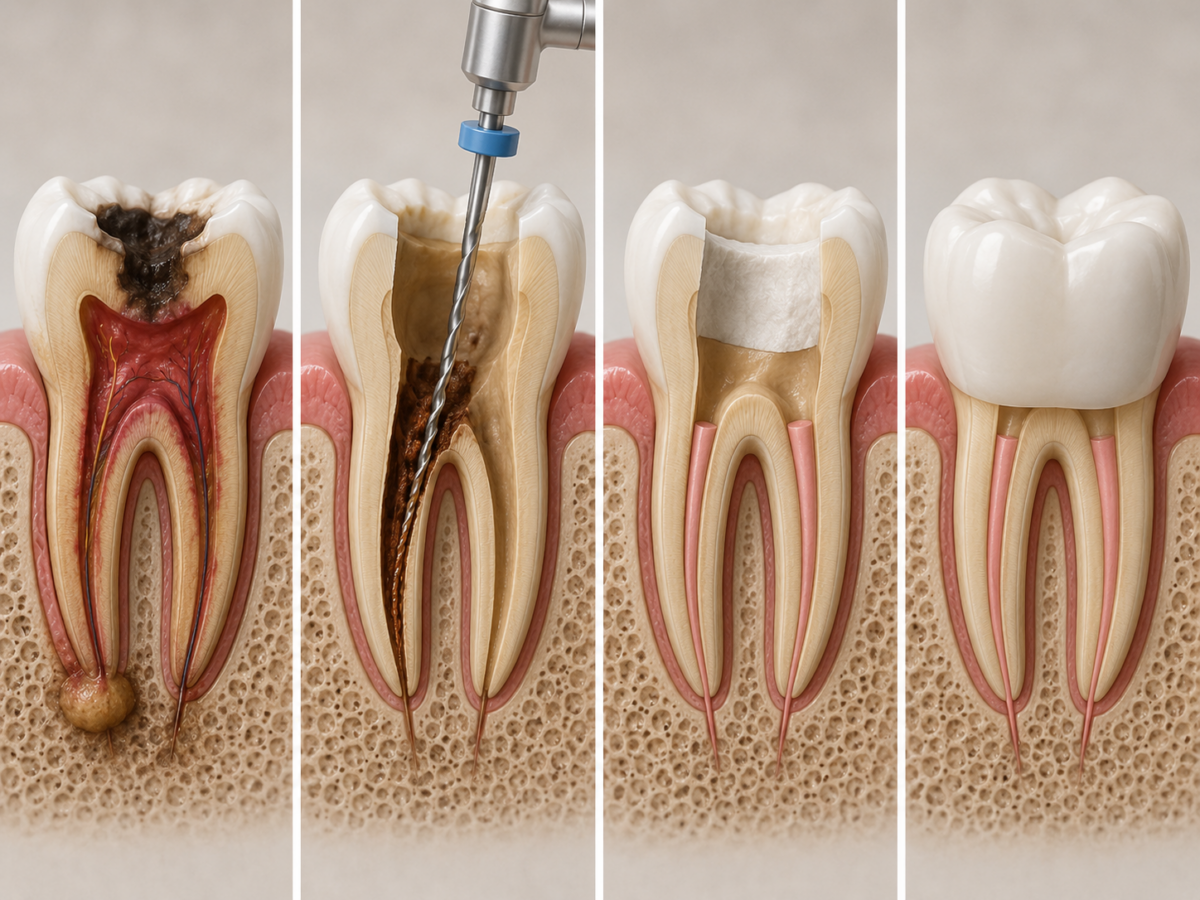
During a root canal, your endodontist typically:
- Numbs the area for comfort
- Creates a small opening in the tooth
- Removes the infected pulp
- Cleans and disinfects the root canals
- Fills and seals the canals
- Recommends a final restoration, often a crown, to protect the tooth
For many patients, modern root canal therapy is much more comfortable than expected. It is designed to relieve pain, not cause it.
What Is a Tooth Extraction?
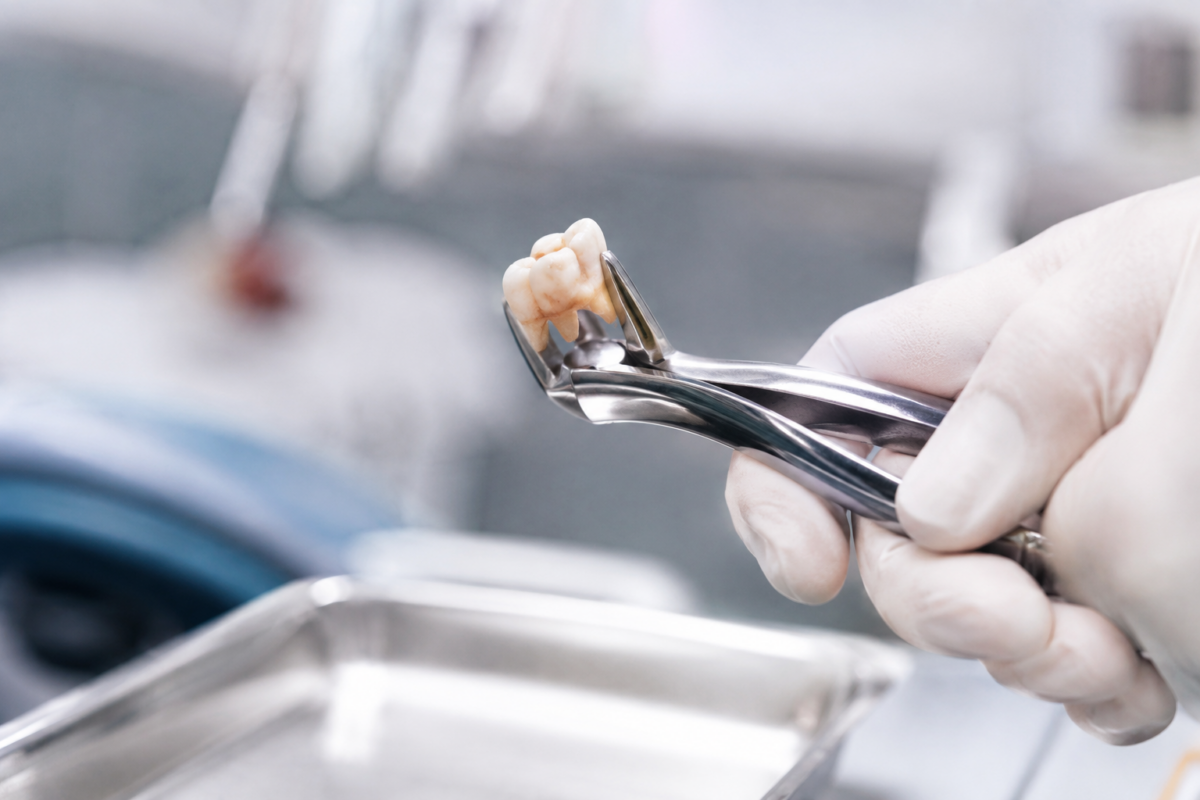
A tooth extraction removes the entire tooth from its socket. This may be recommended when the tooth is too damaged, fractured, loose, or infected to be predictably saved.
Extraction can stop the infection by removing the affected tooth, but it also creates a new concern: the missing tooth often needs to be replaced. Without replacement, nearby teeth can shift, chewing function can change, and bone loss may occur in the area over time.
Common tooth replacement options after extraction include:
- Dental implants
- Dental bridges
- Partial dentures
For some patients, extraction is the right choice. However, it is important to understand that removing the tooth is often only the first step. Replacing the tooth may involve additional time, cost, procedures, and healing.
Root Canal vs Extraction: Key Differences
When comparing root canal vs extraction, the biggest difference is whether the natural tooth stays in place. A root canal treats the infection from within the tooth, while extraction removes the tooth entirely.
Factor | Root Canal | Extraction |
Main goal | Save the natural tooth | Remove the infected or damaged tooth |
Best for | Teeth that can still be restored | Teeth that are severely broken, cracked, loose, or non-restorable |
Tooth preservation | Keeps your natural tooth | Removes the natural tooth |
Follow-up care | Often needs a crown or final restoration | Often needs implant, bridge, or denture planning |
Impact on chewing | Helps maintain normal bite function | May affect chewing unless the tooth is replaced |
Bone and tooth alignment | Helps preserve natural spacing and function | Missing teeth can lead to shifting and bone changes |
Long-term cost | May be more cost-effective if the tooth is saved | May cost more over time if replacement is needed |
Treatment priority | Preferred when the tooth has a good prognosis | Preferred when saving the tooth is not predictable |
Which Option Is Better for an Infected Tooth?
In most cases, a root canal is the better option if the tooth can be saved. Your natural teeth are designed to handle biting forces, maintain spacing, support jawbone health, and preserve your smile’s function. When root canal therapy can remove the infection and the tooth can be properly restored, saving the tooth is often the ideal outcome.
That said, extraction may be better when the tooth is too compromised to last. A root canal is not always the right solution if the remaining tooth structure is weak, the tooth has a vertical root fracture, or advanced gum disease has affected the support around the tooth.
The best option is not always the same for every patient. A specialist will evaluate the tooth, surrounding bone, gum health, infection severity, restorability, and your long-term oral health goals before recommending treatment.

When to Extract a Tooth vs Get a Root Canal
Knowing when to extract a tooth vs get a root canal comes down to whether the tooth can be treated, restored, and maintained successfully.
A Root Canal May Be Recommended When:
- The infection is inside the tooth pulp
- The tooth has enough healthy structure left
- The root is stable
- The surrounding bone support is adequate
- The tooth can be restored with a crown or filling
- There is no major vertical root fracture
- You want to preserve your natural tooth
A root canal is often the preferred treatment for an infected tooth when the tooth is structurally sound enough to remain functional after treatment.
An Extraction May Be Recommended When:
- The tooth is severely broken below the gumline
- There is a vertical root fracture
- The tooth is too loose due to advanced periodontal disease
- There is not enough tooth structure to support a restoration
- The infection is severe and the tooth has a poor long-term prognosis
- A previous treatment has failed and retreatment is not predictable
- The tooth cannot be safely or successfully restored
Extraction is not a failure. In the right situation, it can be the healthiest choice. The key is making sure the decision is based on a careful diagnosis rather than pain, fear, or the assumption that pulling the tooth is always simpler.
Pain Relief: Root Canal vs Extraction
Both treatments are intended to relieve pain caused by infection. The difference is how they do it.
A root canal relieves pain by removing infected tissue from inside the tooth while preserving the tooth itself. Extraction relieves pain by removing the entire tooth.
Some patients assume extraction is the faster or easier solution. However, once the tooth is removed, the long-term plan becomes more complex if the missing tooth needs replacement. A root canal may involve restoring the tooth afterward, but extraction may involve socket healing, bone preservation, implant planning, bridge preparation, or denture fabrication.
What Happens If You Delay Treatment?
Delaying care for an infected tooth can allow the infection to worsen. Pain may increase, swelling may develop, and the infection can spread to surrounding tissues. The longer treatment is delayed, the more difficult it may become to save the tooth.
You should seek prompt dental care if you have:
- Severe or worsening tooth pain
- Swelling in the gums, jaw, or face
- Pain when biting
- A recurring bump on the gums
- Fever or signs of illness
- A cracked or broken tooth with pain
- Sudden dental pain that disrupts sleep or eating
Severe swelling, difficulty breathing, difficulty swallowing, or fever with facial swelling should be treated as urgent symptoms.
Why Saving the Natural Tooth Often Matters
Your natural tooth does more than fill a space in your smile. It helps you chew comfortably, maintain proper bite alignment, and preserve the natural relationship between neighboring teeth.
When a tooth is removed and not replaced, nearby teeth may begin shifting into the open space. The opposing tooth may also move because it no longer has a stable biting partner. Over time, this can affect your bite, chewing comfort, and oral health.
This is one reason root canal therapy is often recommended when the tooth has a good long-term outlook. Saving the tooth can help maintain the natural structure and function of your mouth.
About Foundation Dental Specialists in Pasadena
At Foundation Dental Specialists in Pasadena, our periodontists and endodontists are passionate about providing patients with improved dental care. We create customized treatment plans based on strong scientific evidence, clinical judgment, experience, and patient preference. This approach allows our team to recommend oral health solutions that are both clinically sound and personalized to each patient’s needs.
For patients experiencing severe tooth pain or infection, we proudly offer root canal therapy in Pasadena, including same-day emergency root canal services when urgent care is needed.
We also use advanced digital imaging techniques, including our CBCT scanner, to better evaluate the tooth, roots, surrounding bone, and infection patterns. This detailed imaging can help improve diagnosis, treatment planning, and precision during complex root canal cases.

Contact Foundation Dental Specialists Today to Schedule Root Canal Therapy in Pasadena
When it comes to root canal vs extraction, the best choice depends on whether the infected tooth can be safely saved and restored. In many cases, root canal therapy is the preferred option because it removes the infection while preserving your natural tooth, bite function, and smile. However, extraction may be the better solution when a tooth is too damaged, fractured, loose, or structurally compromised to provide a predictable long-term outcome.
Contact Foundation Dental Specialists today to learn more about root canal therapy, ask about same-day emergency root canals, or schedule an appointment with our Pasadena team.