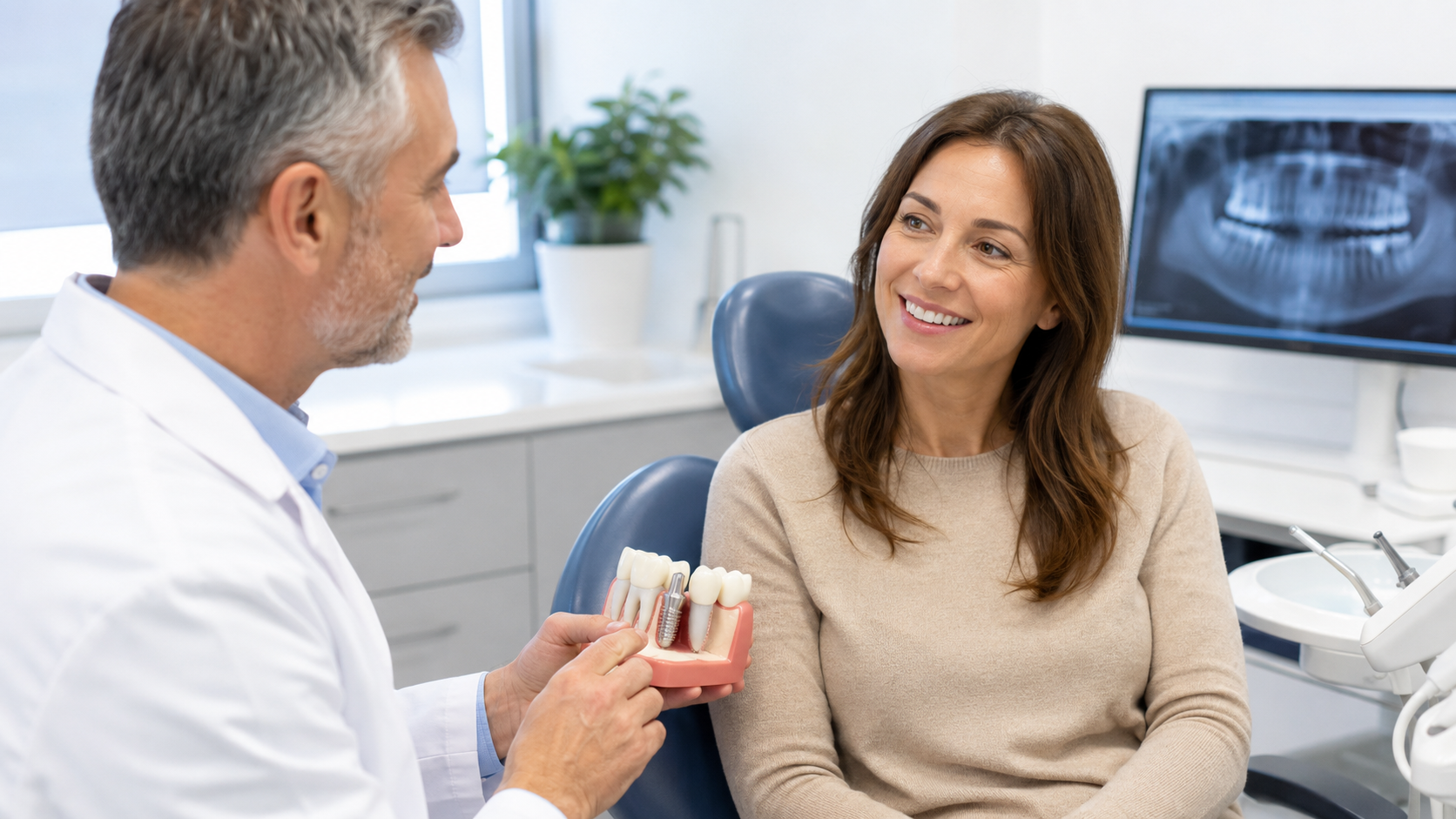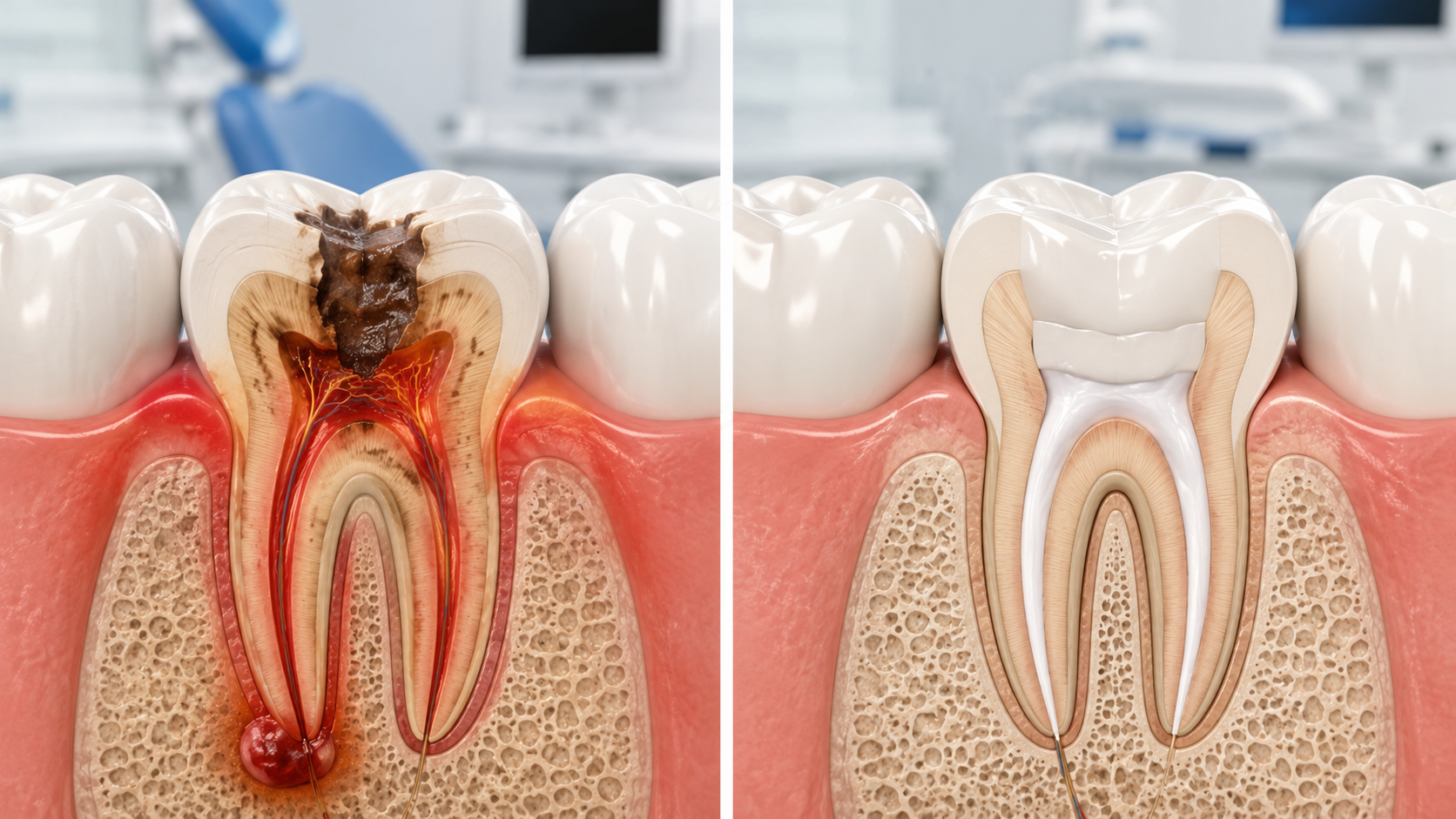
Losing multiple teeth can affect much more than your smile. It can make eating harder, change the way you speak, and reduce confidence in daily life. For many patients, traditional dentures help restore appearance, but they do not always provide the stability and comfort needed for long-term function. That is where implant overdentures can make a major difference.
Edentulous patients (those who have lost all their teeth) often experience bone loss, reduced oral function, and changes in facial esthetics, which can negatively impact confidence and overall quality of life.
An implant supported overdenture is a type of tooth replacement option that combines a removable denture with the support of dental implants. Instead of resting only on the gums, the denture connects to implants placed in the jawbone for added retention and stability. This design can help patients enjoy a more secure fit, better chewing ability, and improved comfort compared to conventional dentures. Implant overdentures are a cost-effective treatment option for edentulous patients, offering improved quality of life and facial esthetics compared to traditional dentures.
In this guide, we will explain what implant overdentures are, how they work, their benefits, who may be a good candidate for treatment, the different treatment options available, and discuss the cost benefits of implant overdentures.
What Are Implant Overdentures?
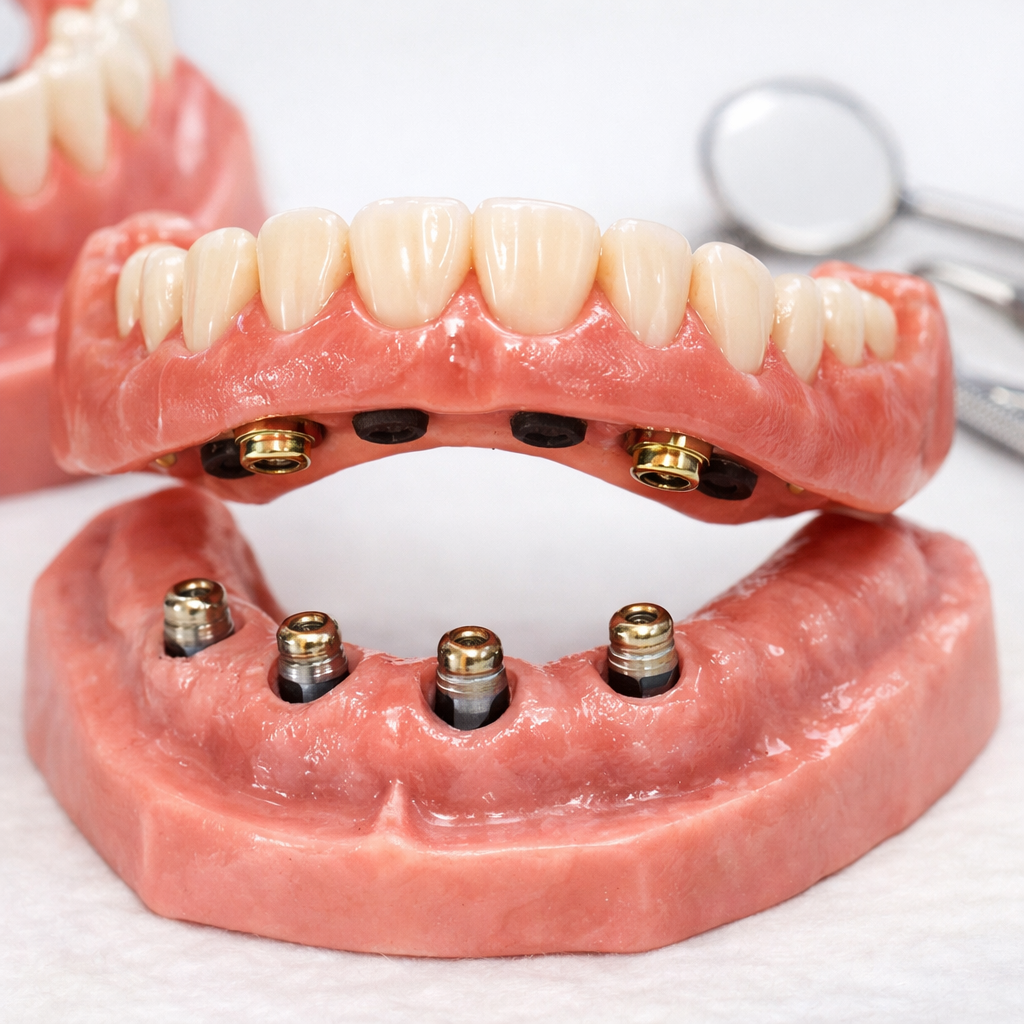
Implant overdentures are removable dentures that attach to dental implants surgically placed in the jaw. Unlike traditional dentures, which rely on suction, adhesives, and gum support alone, an implant supported overdenture is stabilized by implants that help hold the denture in place.
A lower or upper implant overdenture may be supported by two or more implants, depending on the patient’s anatomy, bone volume, and treatment goals. The number of implants required is determined by the available bone in the mandible or maxilla, which clinicians assess using imaging techniques such as radiography or CBCT scans to ensure proper implant placement and avoid vital anatomical structures. The denture is designed with special attachments that connect securely to the implants while still allowing the prosthesis to be removed for cleaning.
This treatment is often recommended for patients who are missing all or most of their teeth in one arch and want more stability than traditional dentures can provide without choosing a permanently fixed restoration. Clinicians and the restorative dentist play a key role in planning and executing implant therapy, ensuring optimal outcomes for the patient.
The overdenture incorporates prosthetic teeth for improved function and esthetics. During the treatment process, an existing denture can be relined or modified for provisional use, or an immediate denture may be fabricated to maintain esthetics and function immediately after extractions until the final prosthesis is delivered.
Implant overdentures can be supported by as few as two implants in the lower jaw (mandible), while the upper jaw may require more implants for stability.
Types of Implant Overdentures
There are different types of implant overdentures, and the right option depends on each patient’s needs. The dental lab plays a crucial role in fabricating the overdenture components, ensuring proper fit and esthetics for optimal patient outcomes.
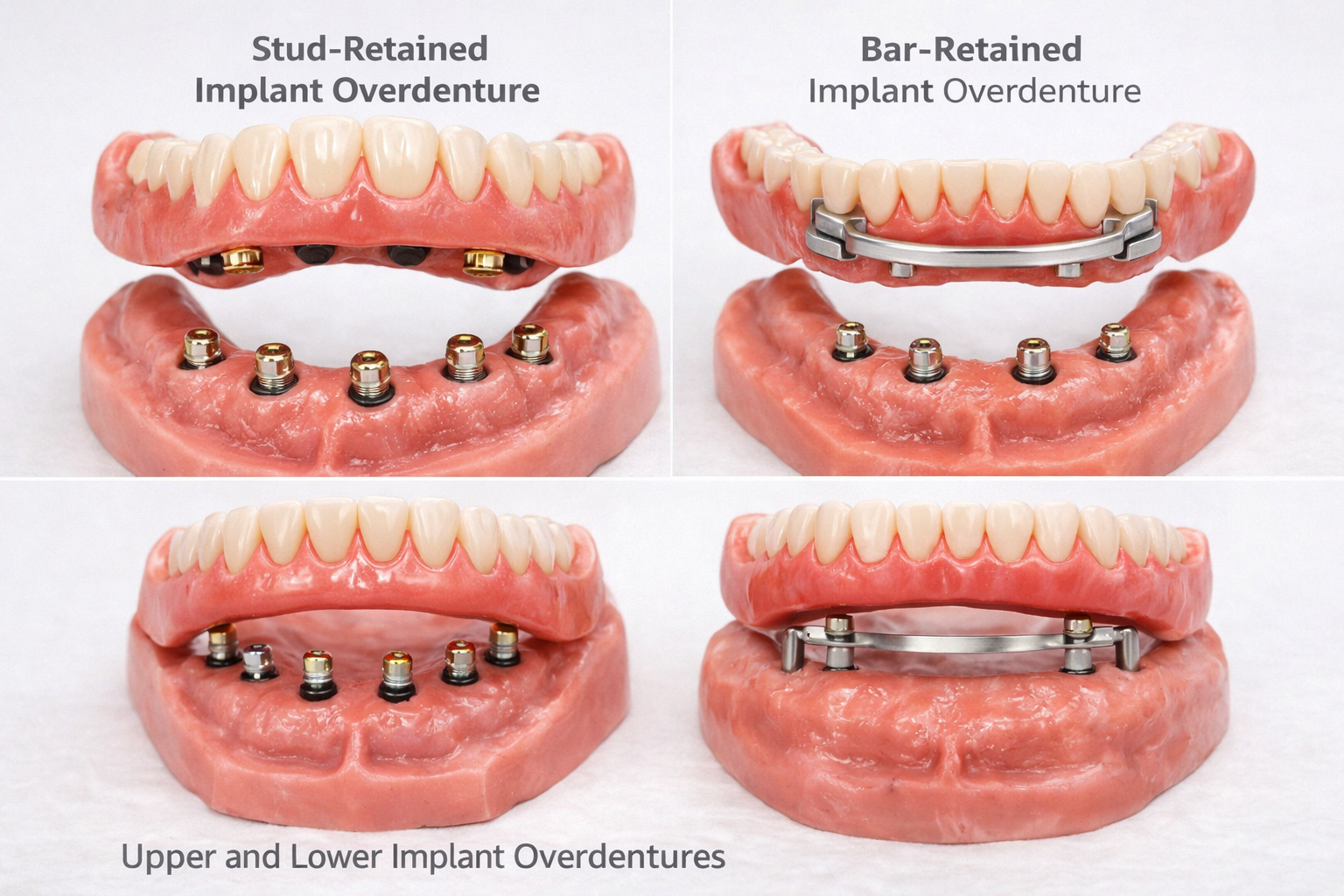
- Stud-Retained Implant Overdenture: This type uses individual attachments on each implant. The denture snaps onto the implants and is removed by the patient when needed.
- Bar-Retained Implant Overdenture: A thin custom bar connects the implants, and the denture attaches to that bar. This option can provide strong retention and even support across the arch, while also enhancing esthetics and function by improving facial appearance and patient confidence.
- Upper and Lower Implant Overdentures: Both the upper and lower arches can be treated with an implant supported overdenture. Lower overdentures are especially popular because traditional lower dentures often have less stability.
For example, a clinician may recommend a bar-retained overdenture for a patient with significant bone loss who desires improved esthetics and support, while a stud-retained option might be chosen for a patient with adequate bone volume and simpler esthetic needs.
How Does an Implant Overdenture Work?
An implant supported overdenture works by anchoring a denture to dental implants embedded in the jawbone. These implants act like artificial tooth roots and provide a stable foundation for the denture.
The implant overdenture procedure involves several key appointments, each critical for evaluating fit, occlusion, and patient comfort. The process is overseen by a qualified doctor or dentist with experience in implant therapy.
The process generally works like this:
1. Dental Implants Are Placed in the Jaw
Small titanium implants are surgically inserted into the upper or lower jawbone. Over time, the implants fuse with the bone in a process called osseointegration. This creates a strong, supportive base for the denture.
2. Attachments Are Added
After healing, attachment components are placed on the implants. These may include locator attachments, bars, or other connection systems depending on the treatment plan.
3. The Denture Snaps or Fits Into Place
The denture is custom-made to connect to the implant attachments. Once in place, the implant overdenture gains added stability and is much less likely to shift during speaking or eating.
4. The Denture Can Be Removed for Cleaning
Although secure during daily use, most implant overdentures are removable. Patients can take them out for hygiene and maintenance, making them a convenient option for many people.
Benefits of Implant Overdentures
For many patients, implant overdentures offer meaningful improvements in comfort, function, and confidence. Studies consistently report high satisfaction rates and an improved quality of life for individuals with implant overdentures, especially when compared to traditional dentures.
Greater Stability
One of the biggest advantages of implant overdentures is their improved stability. Because the denture attaches to implants, it is less likely to slip or shift out of place during normal daily activities. This added security can make speaking, laughing, and eating feel much more natural.
Improved Chewing Ability
An implant supported overdenture typically provides better bite strength than a traditional denture that rests only on the gums. Many patients find they can enjoy a wider range of foods with greater ease and less frustration. This can make meals more comfortable and help support better overall nutrition.
Better Comfort
Traditional dentures can sometimes rub against the gums and create irritation or sore spots over time. An implant overdenture reduces unnecessary movement, which can improve overall comfort throughout the day. Many patients appreciate how much more secure and less bulky their denture feels with implant support.
Bone Preservation
Dental implants help stimulate the jawbone in a way that traditional dentures cannot. This stimulation may slow the bone loss that often happens after teeth are lost. Preserving bone structure can also help maintain facial support and long-term oral health.
Increased Confidence
When a denture feels more secure, patients often feel more confident in social and everyday situations. Implant overdentures can make it easier to speak clearly, smile freely, and eat in public without worrying about movement. That added confidence can have a meaningful impact on quality of life.
Easier Maintenance Than Fixed Options
A removable implant overdenture offers the stability of implants while still being easy to take out for cleaning. This can make daily hygiene more manageable for many patients compared to some fixed full arch restorations. It also allows patients to enjoy the benefits of implant support without giving up the convenience of a removable prosthesis.
Implant Overdentures vs. Traditional Dentures
Choosing between implant overdentures and conventional dentures often comes down to stability, comfort, and long-term goals. Implant overdentures are frequently supported by as few as two implants in the lower jaw, making them a practical treatment option for many patients. The table below highlights some of the key differences.
Feature | Implant Overdentures | Traditional Dentures |
Support | Anchored to dental implants | Rest on gums only |
Stability | More secure and less movement | More likely to shift or slip |
Chewing Ability | Stronger bite and improved function | More limited chewing efficiency |
Comfort | Often more comfortable due to reduced movement | May cause sore spots and irritation |
Bone Stimulation | Helps preserve jawbone through implant support | Does not stimulate bone |
Retention | Uses implant attachments for a snug fit | Often depends on suction or adhesive |
Cleaning | Usually removable for cleaning | Removable for cleaning |
Treatment Process | Requires implant placement surgery | No surgery required |
Long-Term Experience | Often provides better confidence and function | May need more frequent adjustments as bone changes |
Implant overdentures provide a cost-effective solution to complete edentulism compared to traditional dentures, and should be considered among the primary treatment options for edentulous patients.
Who Is a Good Candidate for an Implant Overdenture?
Many adults who are missing all or most of their teeth may be candidates for an implant overdenture, but several factors help determine whether treatment is appropriate.
Good candidates often include patients who:
- Are missing a full arch of teeth or need remaining failing teeth replaced
- Want more stability than traditional dentures provide
- Have enough available bone to support implants, as determined by clinicians using imaging techniques such as radiography or CBCT scans, or are open to bone grafting if needed
- Are in generally good oral and overall health
- Want a removable option that is more secure than standard dentures
Even if a patient has experienced bone loss, they may still qualify for implant overdentures after a detailed evaluation. A comprehensive exam, imaging, and treatment planning consultation are the best ways to determine candidacy.
Full Arch Implant Solutions at Foundation Dental Specialists in Pasadena
At Foundation Dental Specialists in Pasadena, we help patients restore their smiles with advanced full arch tooth replacement solutions tailored to their needs. Our team provides comprehensive dental care for patients seeking full arch implant restoration, including both fixed full arch implants and implant overdenture options.
Whether you are looking for a non-removable solution or want the flexibility of implant overdentures, we take the time to evaluate your goals, explain your options clearly, and create a treatment plan designed for long-term function, comfort, and confidence. Our practice is committed to helping patients regain a stable, healthy smile with personalized implant care in a supportive environment.
Schedule a Consultation for Full Arch Implant Restorations at Foundation Dental Specialists
If you are tired of dealing with loose dentures or want a more secure way to replace missing teeth, implant overdentures may be the solution you have been looking for. A well-designed implant supported overdenture can improve stability, comfort, chewing ability, and overall confidence while offering a practical removable alternative to traditional dentures.
To learn whether an implant overdenture is right for you, contact Foundation Dental Specialists in Pasadena today or give us a call at (626) 796-5361 to explore your full arch implant restoration options.
Frequently Asked Questions
Are implant overdentures better than traditional dentures?
For many patients, the answer is yes, especially when stability and function are top priorities. Implant overdentures are often considered a major improvement over traditional dentures because they stay in place better and feel more secure. However, the right treatment depends on the patient’s budget, oral health, anatomy, and preferences.
Are implant overdentures removable?
Yes, most implant overdentures are removable, which makes them easier to clean and maintain at home. They are designed to stay secure during daily use but can be taken out as directed by your dental provider.
Do implant overdentures look natural?
Yes, implant overdentures are custom-made to look natural and restore the appearance of a full smile. They are designed to improve both function and aesthetics for patients who need full-arch tooth replacement.
Where can I get implant overdenture treatment in Pasadena?
Patients looking for implant overdenture treatment in Pasadena can schedule a consultation with Foundation Dental Specialists to explore their options. Our team offers full arch implant restoration solutions, including both fixed full arch implants and removable implant overdentures.