Missing teeth can affect more than just your smile. They can make chewing more difficult, change the way you speak, and gradually contribute to bone loss in the jaw. Dental implants are one of the most reliable long-term solutions because they replace the tooth root as well as the visible tooth, helping restore both function and appearance.
If you are researching the types of dental implants available today, it is helpful to understand that there are both different implant placements and different restorations that can attach to those implants. This guide explains the different types of dental implants in a clear, practical way so you can better understand which option may fit your needs, goals, and oral health.
What Are Dental Implants?
Dental implants are small posts, usually made from biocompatible titanium, that are surgically placed to support replacement teeth. Once the implant integrates with the surrounding bone, it can hold a crown, bridge, or denture securely in place.
Unlike traditional tooth replacement options that sit on top of the gums, implants are designed to function like natural tooth roots. That added support can improve stability, chewing power, and comfort while also helping preserve the jawbone over time.
Why Are There Different Types of Dental Implants?
Not every patient needs the same kind of implant treatment. The right solution often depends on:
- How many teeth are missing
- Where the missing teeth are located
- The amount and quality of available jawbone
- Whether you want a fixed or removable restoration
- Your overall oral health and treatment goals
Understanding the different types of dental implants can make it easier to ask informed questions during your consultation and feel more confident about your decision.
Main Types of Dental Implants
When most people talk about the types of dental implants, they are referring to how the implant is placed in relation to the bone.
Endosteal Implants
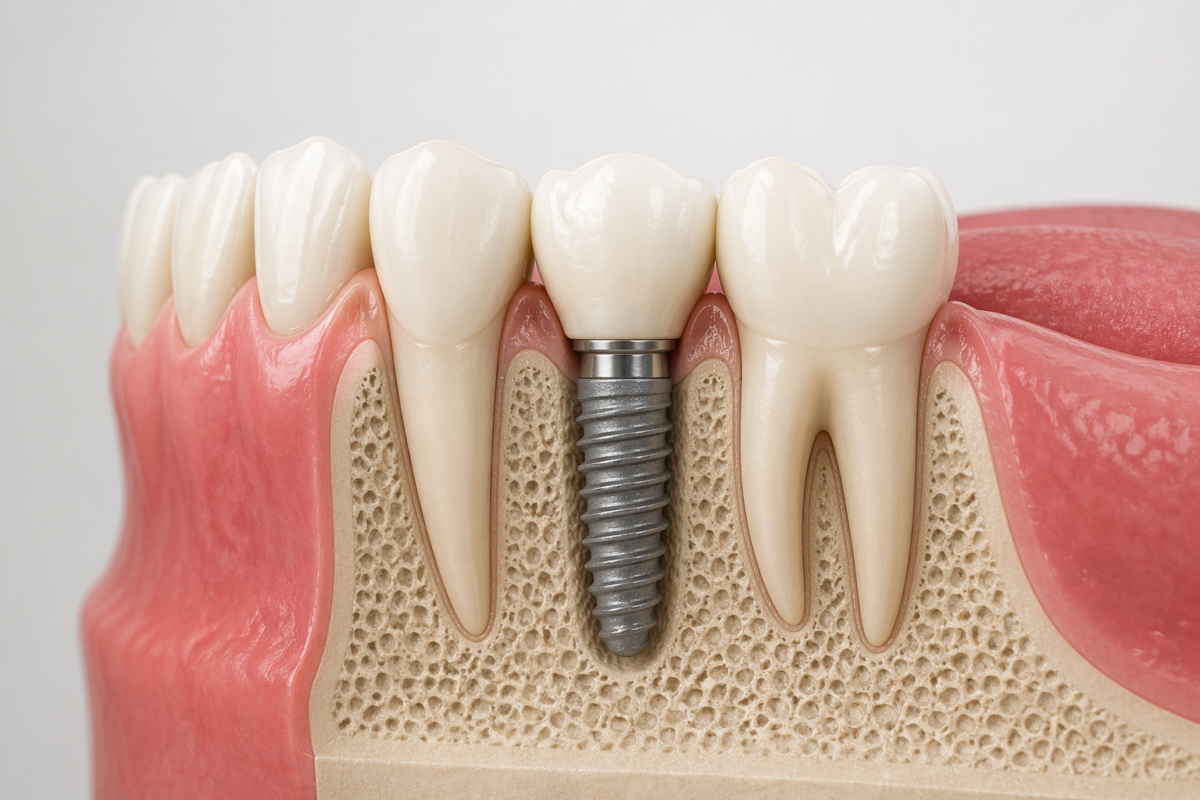
Endosteal implants are the most common of all different types of dental implants. These implants are placed directly into the jawbone and typically look like small screws or cylinders. Because they are anchored in bone, they are known for their strength, stability, and long-term success.
Most patients who are good candidates for implants receive endosteal implants. They work well for replacing one tooth, several teeth, or even a full arch when paired with the right restoration.
Best for: Patients with healthy jawbone density who want a strong, long-lasting implant option.
Zygomatic Implants
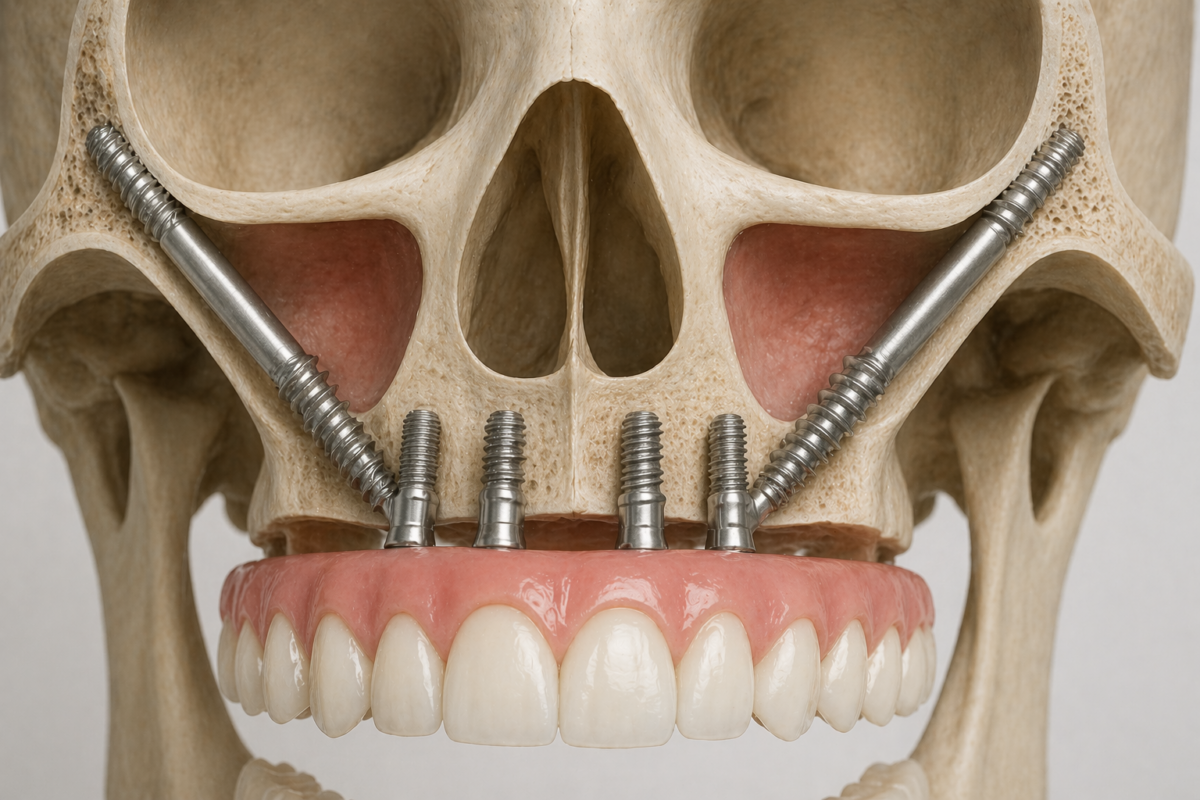
Zygomatic implants are among the most specialized types of dental implants. Instead of being placed in the upper jawbone, they are anchored in the cheekbone, also called the zygoma. These implants are usually recommended only in cases of severe upper jaw bone loss.
Because zygomatic implants are more complex, they require advanced training and careful treatment planning. However, they can provide an alternative for patients who want to avoid extensive bone grafting.
Best for: Patients with severe upper jaw bone loss who may not qualify for traditional upper implants.
Mini Dental Implants
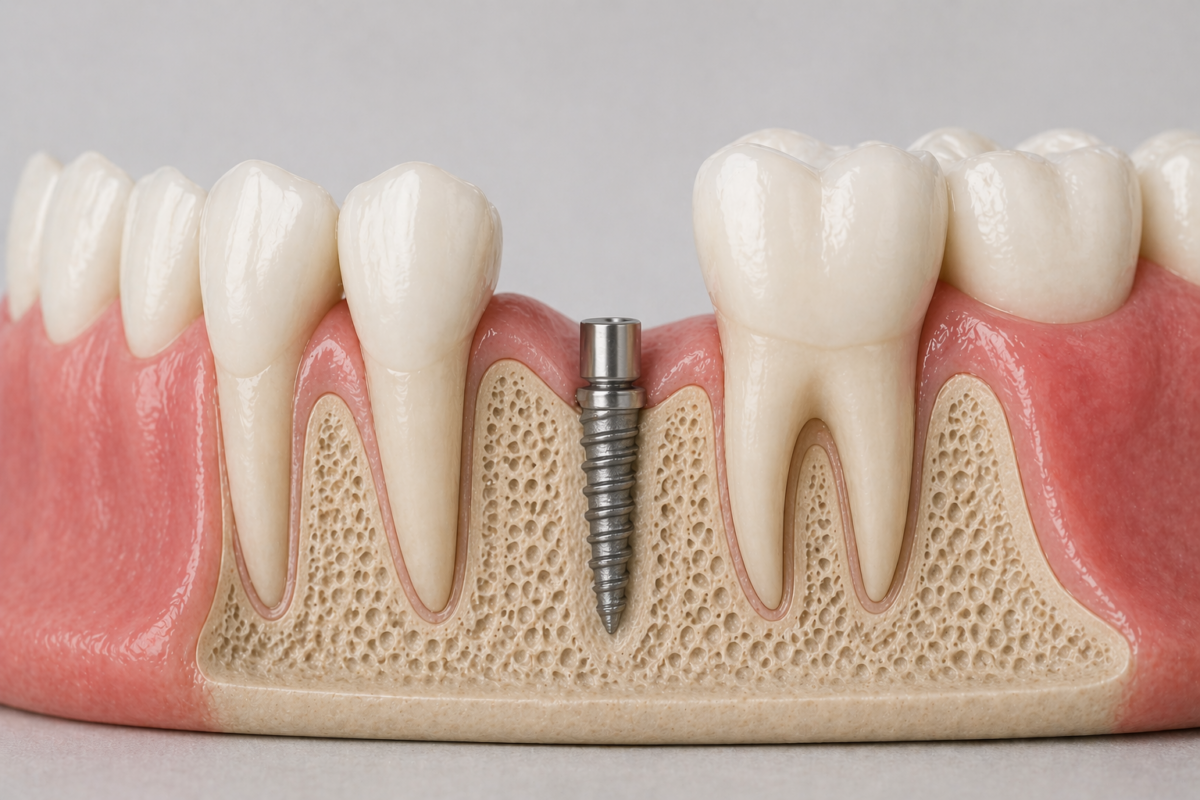
Mini dental implants are smaller in diameter than traditional implants. They may be used in cases where there is limited bone or when a less invasive treatment is preferred. In some cases, they can also serve temporary or transitional purposes.
While mini implants can be helpful, they are not the right fit for every patient. They may not offer the same level of support as standard implants in all situations, especially for heavy bite forces or larger restorations.
Best for: Select patients with limited space or bone, or those seeking a less invasive treatment in appropriate cases.
Different Types of Dental Implants by Restoration
When people search for the different types of dental implants, they are often also asking what kind of replacement teeth the implants can support. Here are the most common restorative options.
Single Tooth Implant
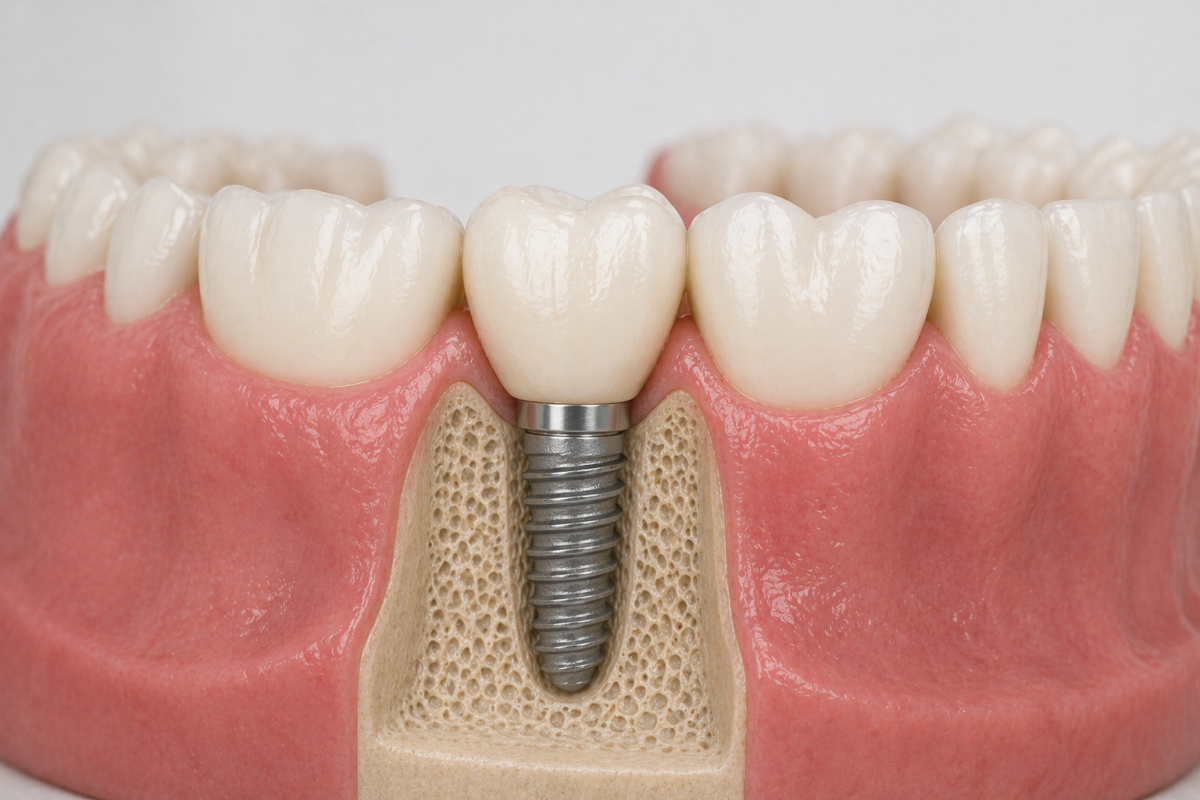
A single tooth implant replaces one missing tooth using one implant post and one custom dental crown. This option is popular because it restores the look and function of a natural tooth without relying on neighboring teeth for support.
Ideal for: Patients missing one tooth in an otherwise healthy area of the mouth.
Implant-Supported Bridge
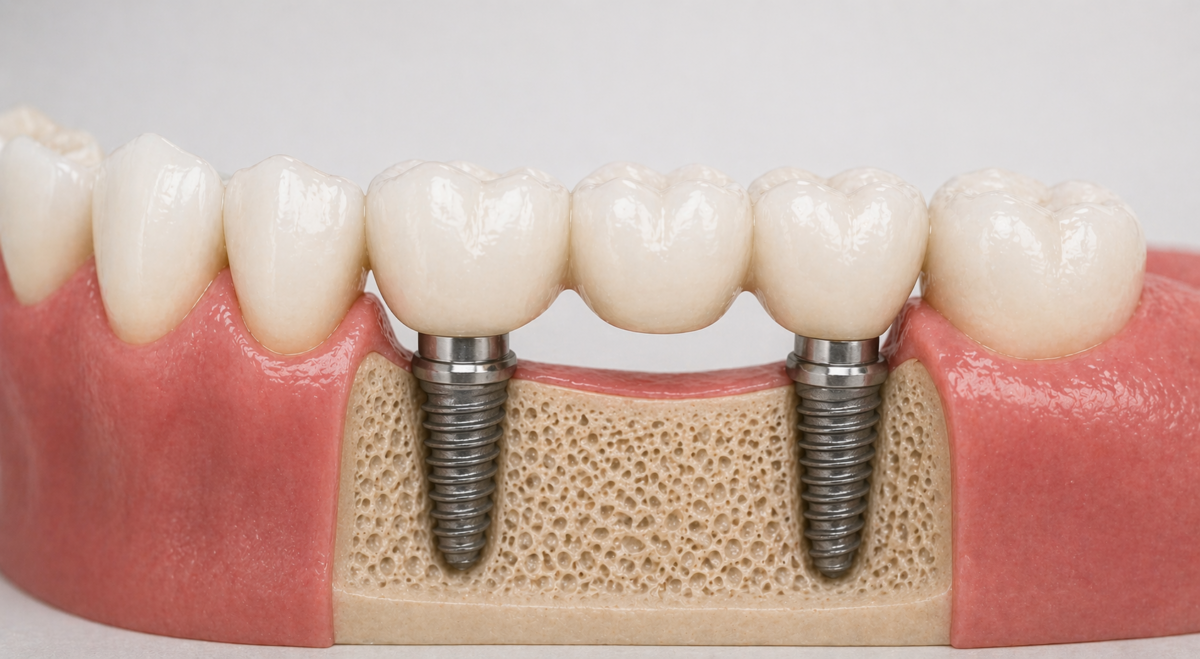
An implant-supported bridge replaces multiple missing teeth in a row. Instead of placing one implant for every missing tooth, two or more implants can support a bridge that spans the gap. This can be an efficient and durable solution when several adjacent teeth are missing.
Ideal for: Patients missing several teeth in the same section of the mouth.
Implant-Supported Dentures
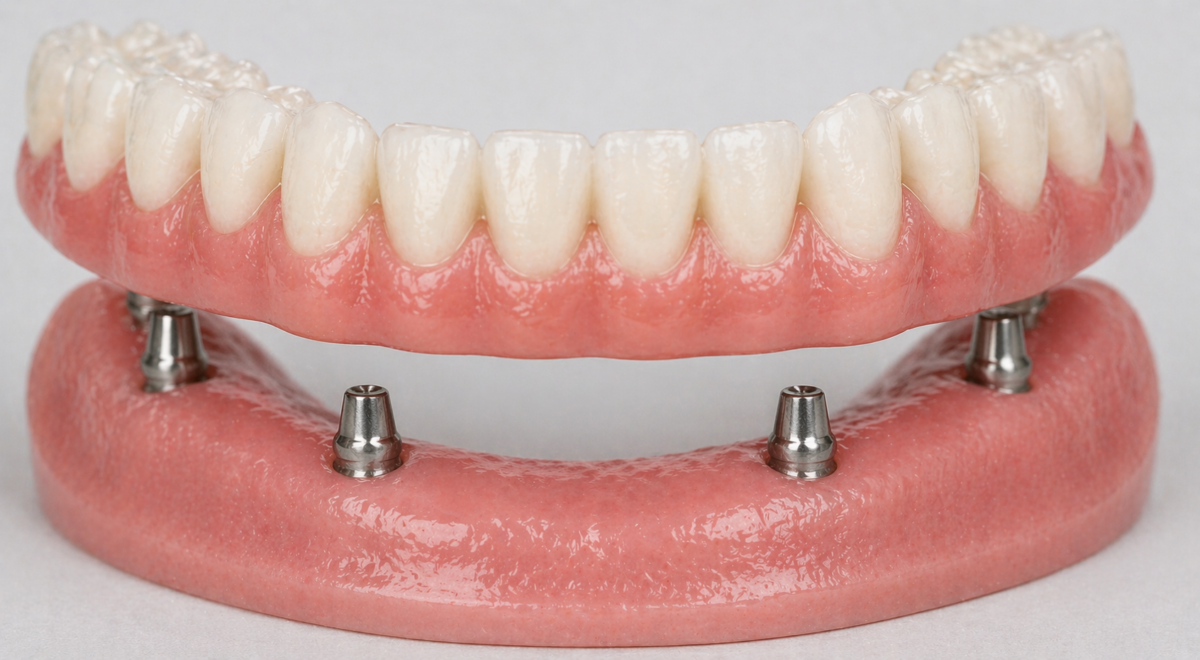
Implant-supported dentures use dental implants to stabilize a denture. These may be removable or fixed depending on the treatment plan. Compared with traditional dentures, implant-supported dentures offer better support, improved comfort, and less slipping during eating or speaking.
Ideal for: Patients missing many or all teeth who want more stability than traditional dentures can provide.
Full-Arch Dental Implants: All-on-4 and All-on-6
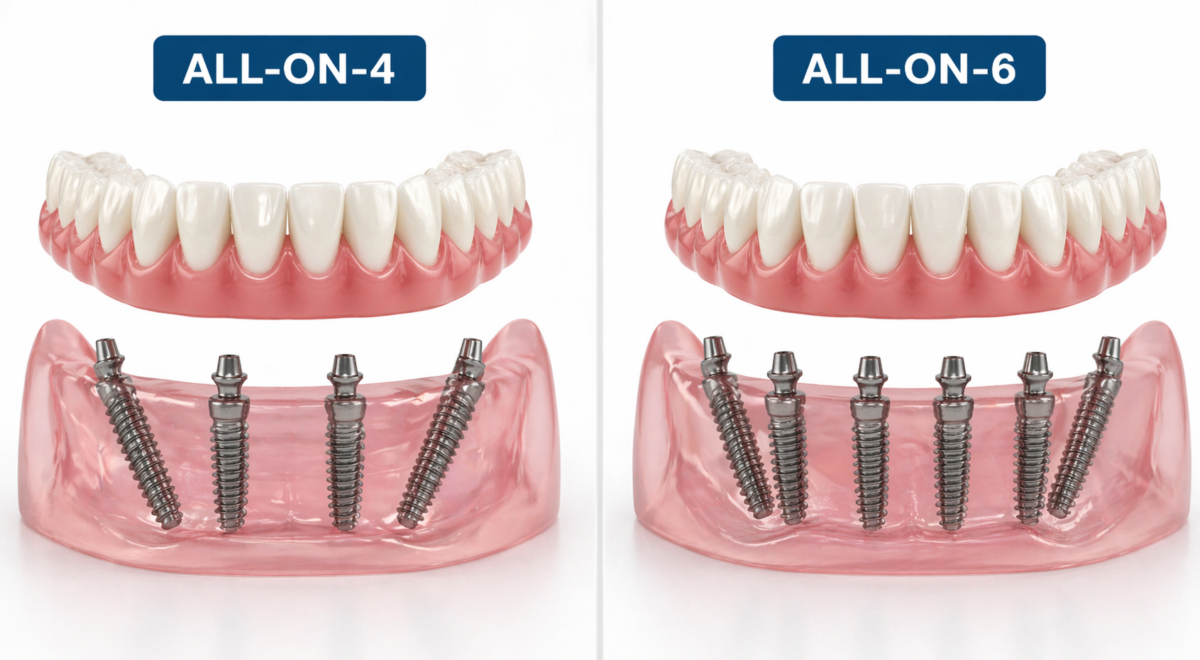
Full-arch dental implants are designed to replace an entire upper or lower arch of teeth using four or more implants. These are commonly known as All-on-4 or All-on-6. In many cases, they allow patients to restore a full smile with fewer implants than placing one implant per tooth.
These treatments are among the most popular types of dental implants for patients with extensive tooth loss. Full-arch solutions can provide excellent stability, restore chewing power, and create a more natural appearance than traditional removable dentures.
Ideal for: Patients who need a full upper or lower arch restored and want a stable, implant-based solution.
Comparing Types of Dental Implants: Which Option Is Right for You?
Choosing between the different types of dental implants depends on several factors, including how many teeth are missing, the condition of your jawbone, and whether you prefer a fixed or removable solution. While some implant options are best for replacing a single tooth, others are designed to restore multiple teeth or an entire arch with greater stability and efficiency.
Type of Implant or Restoration | How It Works | Best For | Key Advantage | Main Consideration |
Endosteal Implants | Placed directly into the jawbone | Most patients with healthy bone | Strong, secure, and widely used | Requires enough jawbone support |
Zygomatic Implants | Anchored in the cheekbone | Severe upper jaw bone loss | Can help avoid extensive grafting | More complex procedure |
Mini Dental Implants | Smaller-diameter implants | Select cases with limited space or bone | Less invasive in some cases | Not suitable for all restorations |
Single Tooth Implant | One implant supports one crown | One missing tooth | Natural look and function | Surgical placement still required |
Implant-Supported Bridge | Two or more implants support several teeth | Multiple missing teeth in a row | Replaces several teeth efficiently | Requires enough support in the area |
Implant-Supported Dentures | Denture attaches to implants | Multiple or full-arch tooth loss | More stable than traditional dentures | May be removable depending on design |
All-on-4 / All-on-6 | Full arch supported by four or more implants | Full-arch tooth replacement | Restores an entire smile with fewer implants | Requires careful planning and evaluation |
The right implant solution is based on your specific needs rather than a one-size-fits-all approach. This chart is not comprehensive, and not every patient will fit neatly into one of these categories.
A thorough evaluation can help determine which type of dental implant offers the best combination of stability, comfort, function, and long-term results for your smile.
Consult your periodontist to determine the best solution for your individual needs.
Factors to Consider When Choosing Between Different Types of Dental Implants
Choosing among the different types of dental implants usually involves balancing several important factors:
- Number of Missing Teeth: Replacing one tooth is very different from replacing a full arch. The number of missing teeth helps determine whether a crown, bridge, overdenture, or full-arch restoration makes the most sense.
- Jawbone Health: Some implant options require more available bone than others. If bone loss is present, additional planning may be needed.
- Fixed vs. Removable Preference: Some patients want a restoration that stays in place at all times, while others prefer a removable option for hygiene and maintenance.
- Budget and Long-Term Value: Different treatments vary in complexity and cost, but the right treatment should be evaluated in terms of durability, function, and quality of life as well as upfront expense.
- Treatment Complexity: Certain implants, especially in advanced cases, require more specialized planning and surgical expertise.
Dental Implant Solutions at Foundation Dental Specialists in Pasadena
At Foundation Dental Specialists in Pasadena, we understand that no two smiles are exactly alike. That is why we offer multiple treatment options tailored to each patient’s needs, whether you are replacing one missing tooth or looking for a more comprehensive full-mouth solution. Our team works closely with patients to evaluate bone health, oral function, aesthetic goals, and long-term comfort when recommending the right implant treatment.
We provide different types of dental implants, including solutions for single missing teeth, implant-supported bridges, and full-arch dental implants. Our full-arch options include All-on-4 and All-on-6 treatment concepts, as well as Implant-Supported Bridge and Implant Overdentures for patients seeking a stable, functional replacement for an entire arch of teeth. By offering a range of advanced implant options in Pasadena, we help patients move toward a treatment plan that feels both personalized and practical.

Take the Next Step Toward a Stronger, Healthier Smile
There are several types of dental implants available today, and each serves a different purpose. From endosteal and zygomatic implants to single tooth replacements, implant-supported bridges, and full-arch restorations, the best solution depends on your oral health, anatomy, and personal goals.
If you have been comparing the different types of dental implants and want expert guidance, Foundation Dental Specialists in Pasadena is here to help. Contact us today to learn more about your options or to schedule an appointment and take the next step toward a healthier, more confident smile.